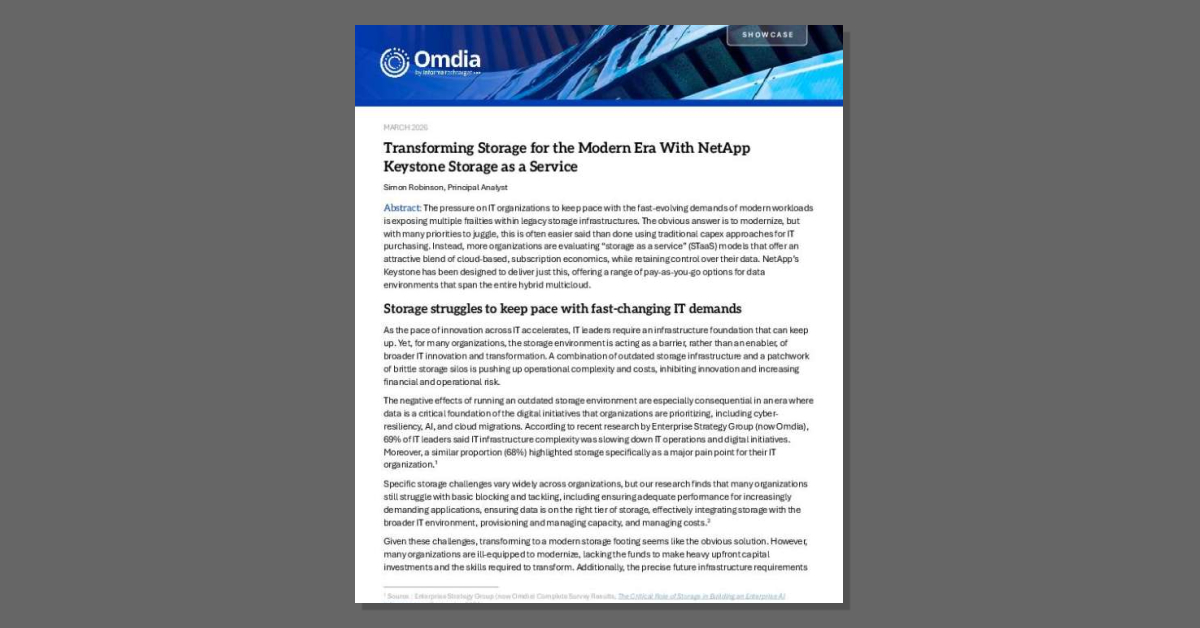
IT teams are reexamining storage because traditional, capex-heavy approaches are struggling to keep up with today’s demands—especially AI, cyber-resilience, and cloud initiatives.
Recent research from Enterprise Strategy Group (now Omdia) highlights the scale of the problem:
- 69% of IT leaders say IT infrastructure complexity is slowing down operations and digital initiatives.
- 68% specifically call out storage as a major pain point.
Common issues with legacy storage environments include:
- Fragmented storage silos that raise operational complexity and costs.
- Difficulty ensuring the right performance and tiering as workloads evolve.
- Challenges integrating storage with broader IT operations and tooling.
- Limited visibility into future capacity needs, especially for AI and data-heavy applications.
- Financial risk from overinvesting (and underutilizing) or underinvesting (and having to upgrade early).
Because of these pressures, the traditional large up-front capex approach is becoming less practical. Many organizations don’t have the budget or skills to continuously refresh and redesign storage for every new wave of workloads.
That’s why more teams are turning to Storage as a Service (STaaS) models like NetApp Keystone, which let them consume storage on a pay-as-you-go, Opex-based basis while keeping data on premises or in their preferred clouds. This model helps align costs with actual usage, reduce complexity, and support modernization without a big one-time investment.




 Sign in with LinkedIn